Write-offs: small balances, recoveries, inventory and assets
You'll write off what won't be collected or used, record a recovery when a written-off customer pays, and handle inventory shrinkage and asset disposals.
- Principles:
- Conservatism
- Matching
What a write-off is
A write-off removes something from the books that no longer has value: a receivable you won't collect, inventory that's lost or useless, or equipment that's gone. It's not hiding a mistake: it makes the balance sheet show what the business really has.
Small balances
A customer short-pays an invoice by $3.50. Chasing it costs more than it's worth. Write the small balance off so the invoice closes and the aging stays clean. Many businesses set a dollar limit, like $10, for small-balance write-offs.
| Account | Debit (Dr) | Credit (Cr) |
|---|---|---|
| Bad Debts | $3.50 | |
| Accounts Receivable | $3.50 | |
| Total Balanced | $3.50 | $3.50 |
Are you Increasing or Decreasing?
| Debit | Credit |
|---|---|
| Liability | Asset |
| Equity | Draw |
| Revenue | Expense |
− To decrease an account, put it on the opposite side.
Accounts Receivable goes down: press − and find Asset on the credit side.
Recoveries
Sometimes a customer you wrote off pays after all. First reverse the write-off to put the receivable back, then record the payment. That keeps the customer's history complete.
| Account | Debit (Dr) | Credit (Cr) |
|---|---|---|
| Accounts Receivable | $640.00 | |
| Bad Debts | $640.00 | |
| Total Balanced | $640.00 | $640.00 |
Are you Increasing or Decreasing?
| Debit | Credit |
|---|---|
| Liability | Asset |
| Equity | Draw |
| Revenue | Expense |
− To decrease an account, put it on the opposite side.
Bad Debts goes down: press − and find Expense on the credit side.
Vendor balances you won't use
An old vendor credit you'll never use, from a vendor you no longer buy from, still sits in Accounts Payable. Clear it to other income or back to the expense, with a note on why.
| Account | Debit (Dr) | Credit (Cr) |
|---|---|---|
| Other Expenses | $85.00 | |
| Accounts Payable | $85.00 | |
| Total Balanced | $85.00 | $85.00 |
Are you Increasing or Decreasing?
| Debit | Credit |
|---|---|
| Asset | Liability |
| Draw | Equity |
| Expense | Revenue |
+ To increase an account, put it on its normal side.
Other Expenses goes up: press + and find Expense on the debit side.
Inventory shrinkage and obsolescence
If you keep inventory, count it. When the count is lower than the books, from damage, theft or mistakes, that's shrinkage. Items you can't sell any more are obsolete and get written down to what they're worth.
| Account | Debit (Dr) | Credit (Cr) |
|---|---|---|
| Cost of Goods Sold | $300.00 | |
| Inventory | $300.00 | |
| Total Balanced | $300.00 | $300.00 |
Are you Increasing or Decreasing?
| Debit | Credit |
|---|---|
| Liability | Asset |
| Equity | Draw |
| Revenue | Expense |
− To decrease an account, put it on the opposite side.
Inventory goes down: press − and find Asset on the credit side.
Disposing of equipment
When equipment is sold or scrapped, take off both its cost and its accumulated depreciation. The difference between what's left and what you got for it is a gain or loss on disposal.
| Account | Debit (Dr) | Credit (Cr) |
|---|---|---|
| Business Checking | $2,500.00 | |
| Accumulated Depreciation | $9,600.00 | |
| Other Expenses (loss on disposal) | $500.00 | |
| Equipment | $12,600.00 | |
| Total Balanced | $12,600.00 | $12,600.00 |
Are you Increasing or Decreasing?
| Debit | Credit |
|---|---|
| Liability | Asset |
| Equity | Draw |
| Revenue | Expense |
− To decrease an account, put it on the opposite side.
Equipment goes down: press − and find Asset on the credit side.
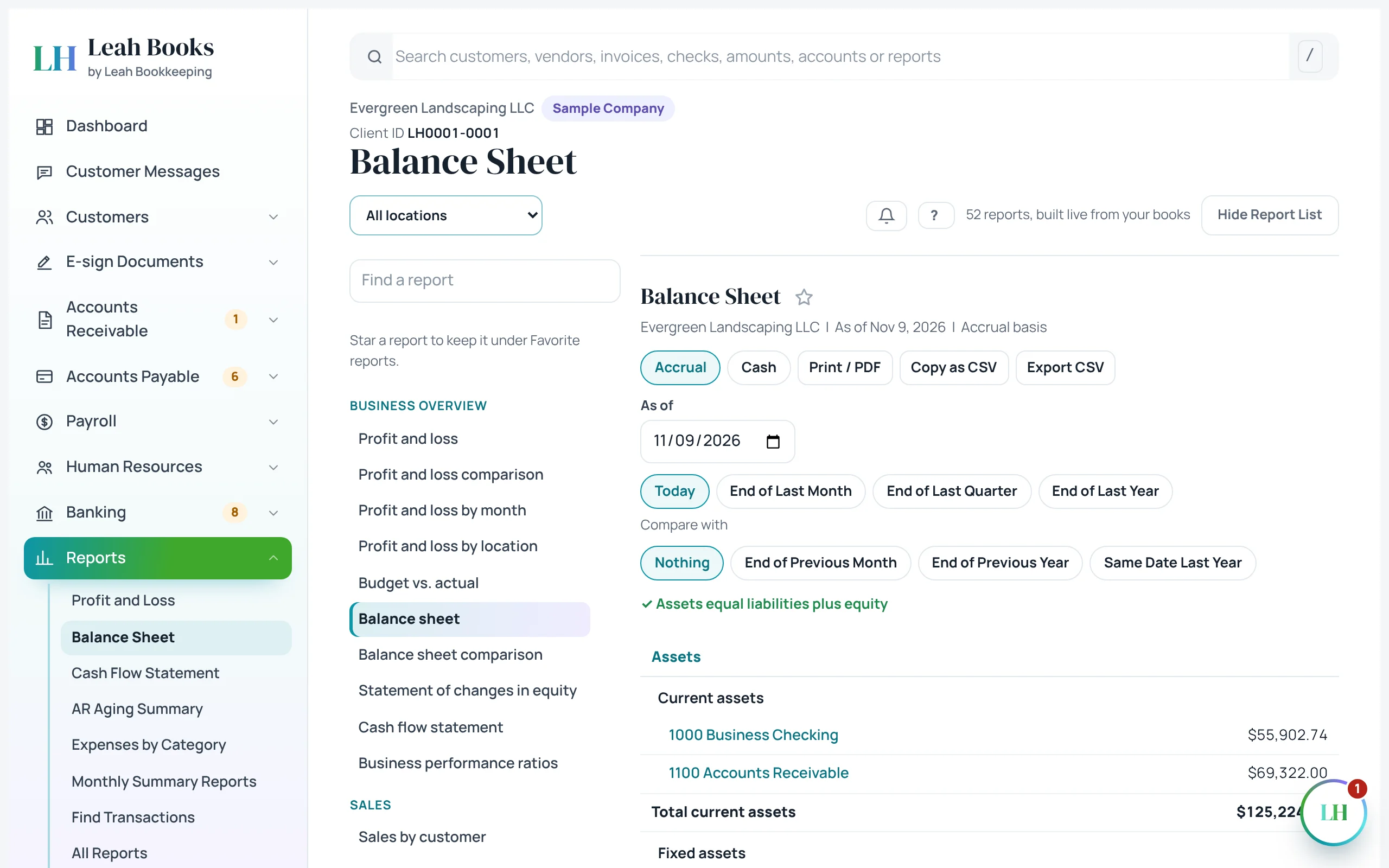 (opens the full-size screenshot)
Try it in Leah Books
- Go to Accounts Receivable > All invoices and open an overdue invoice (create one dated in the past if you have none). Click Write off, enter a small amount and a reason.
- Open the same invoice and look at Undo write-off and Customer paid.
- Open Reports > All reports > Bad debt write-offs.
- Go to Accountant > Fixed assets and click Add asset to see the cost, salvage value and useful life Leah Books uses to work out depreciation and book value.
- Go to Accountant > Manual journals and write the entry for a $300 inventory write-down.
Key terms
- Write-off
- Removing a balance that has no value left, like an uncollectible invoice.
- Recovery
- Collecting a balance that was written off. The write-off is reversed first.
- Shrinkage
- Inventory lost to damage, theft or errors.
- Obsolescence
- Inventory that can't be sold any more.
- Gain or loss on disposal
- The difference between an asset's book value and what you got for it.
Check what you learned
Pick an answer to see if it's right and why. Nothing is saved or sent.