Inventory and cost of goods sold
You'll explain perpetual and periodic inventory, cost goods with FIFO and average cost, and record inventory and cost of goods sold in Leah Books with a count and an adjusting entry.
- Principles:
- Matching
- Historical cost
- Consistency
Inventory is an asset until it's sold
Goods you buy to resell are inventory, an asset. When you sell them, their cost becomes cost of goods sold (COGS) in the same period as the sale. That's matching.
Cost of goods sold = Beginning inventory + Purchases − Ending inventory
Perpetual or periodic
A perpetual system updates inventory and COGS with every sale, using item quantities. A periodic system records purchases and works out COGS from a count at the end of the period.
Leah Books doesn't track item quantities on hand, so use the periodic method: post purchases to cost of goods sold or to an Inventory asset account, count what's left at month-end, and adjust Inventory to the count.
FIFO and average cost
When prices change, you need a rule for which cost goes to COGS. FIFO (first in, first out) uses the oldest costs first. Average cost uses the average of everything bought. Pick one and stay with it.
| Bought | Units | Cost each | Total |
|---|---|---|---|
| March 1 | 100 | $4.00 | $400 |
| March 15 | 100 | $5.00 | $500 |
| Sold 120 units, FIFO cost | $500 (100 × $4 + 20 × $5) | ||
| Sold 120 units, average cost | $4.50 | $540 |
The month-end count
Count what's on hand and price it. If Inventory on the books is $3,200 and the count says $2,600, $600 was used or sold this month and moves to COGS.
| Account | Debit (Dr) | Credit (Cr) |
|---|---|---|
| Cost of Goods Sold | $600.00 | |
| Inventory | $600.00 | |
| Total Balanced | $600.00 | $600.00 |
Are you Increasing or Decreasing?
| Debit | Credit |
|---|---|
| Liability | Asset |
| Equity | Draw |
| Revenue | Expense |
− To decrease an account, put it on the opposite side.
Inventory goes down: press − and find Asset on the credit side.
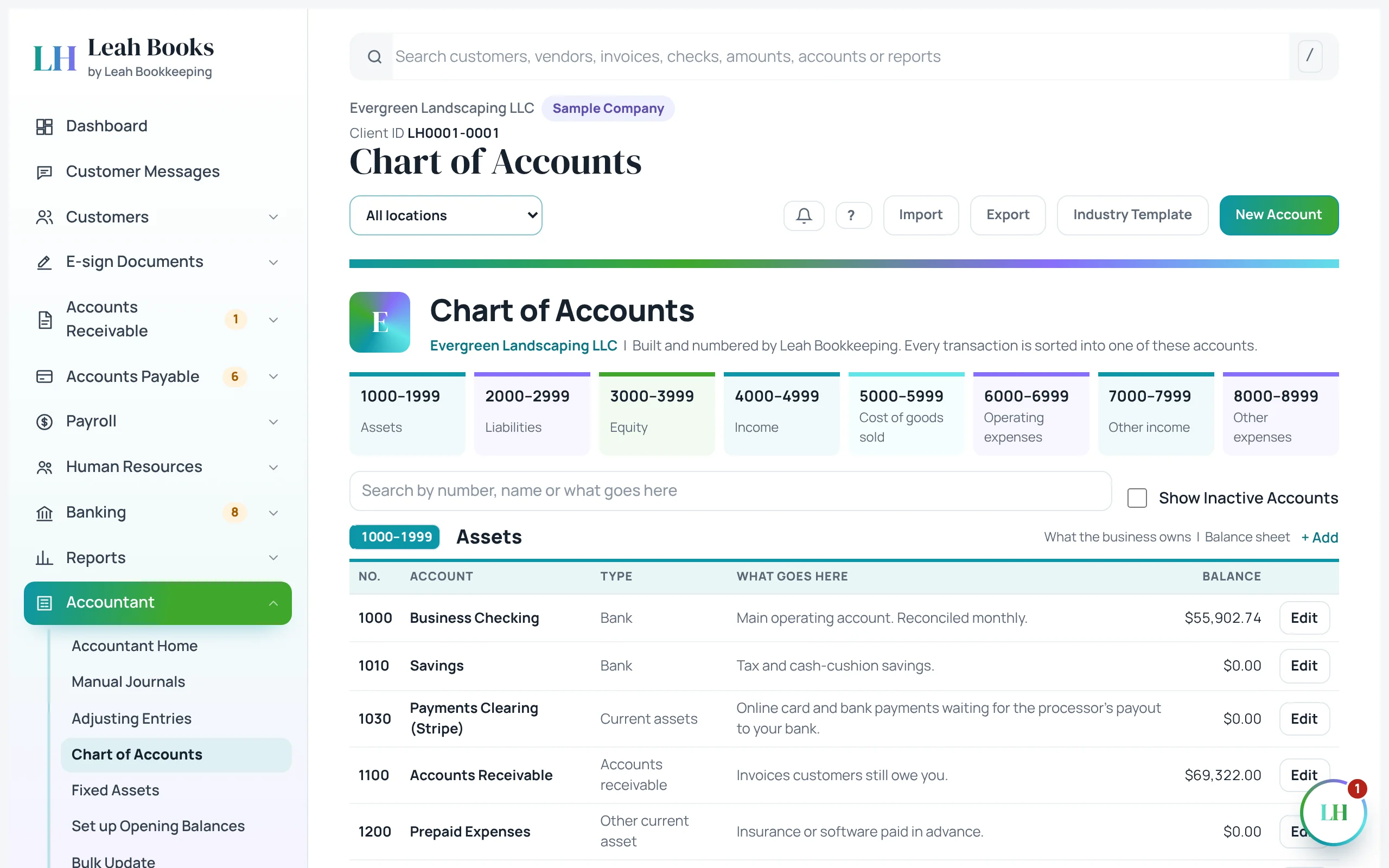 (opens the full-size screenshot)
For a service business
Evergreen mostly sells services, so materials go straight to cost of goods sold as they're used. Only a business that holds goods for resale at month-end needs an Inventory account.
Try it in Leah Books
- Go to Accountant > Chart of accounts and add account 1300 Inventory in the Assets section.
- Go to Accountant > Manual journals and post an entry moving $3,200 of goods on hand from Cost of Goods Sold to 1300 Inventory.
- Pretend the count says $2,600. Post the adjustment: debit 5000 Cost of Goods Sold 600, credit 1300 Inventory 600.
- Open Reports > Profit and loss and Balance sheet to see both sides.
Key terms
- Inventory
- Goods held for sale. An asset until sold.
- Cost of goods sold
- The cost of the goods or materials sold or used in the period.
- Perpetual inventory
- Inventory and COGS updated with every sale.
- Periodic inventory
- COGS worked out from a count at the end of the period.
- FIFO
- First in, first out: the oldest costs go to COGS first.
- Average cost
- Every unit carries the average cost of all units bought.
Check what you learned
Pick an answer to see if it's right and why. Nothing is saved or sent.