The trial balance
Read a trial balance, explain what it proves, and spot the errors it can't catch.
- Principles:
- Double-entry
What a trial balance is
A trial balance lists every account with its balance on one date, debits in one column and credits in the other. Because every entry has equal debits and credits, the two columns must have the same total.
Here is a simplified trial balance for Evergreen Landscaping. Notice that each account sits in the column of its normal balance, except Accumulated Depreciation, a contra-asset with a credit balance.
| Account | Debit | Credit |
|---|---|---|
| Business Checking | 31,240 | |
| Accounts Receivable | 8,960 | |
| Equipment | 42,000 | |
| Accumulated Depreciation | 4,200 | |
| Accounts Payable | 2,640 | |
| Owner's Investment | 70,500 | |
| Landscaping Services | 40,500 | |
| Wages | 27,600 | |
| Rent | 6,600 | |
| Insurance | 1,440 | |
| Total | 117,840 | 117,840 |
Total debit balances = Total credit balances
What it proves
A balanced trial balance proves one thing: the debits and credits recorded are equal. It is a quick check that no entry was posted one-sided and that the math adds up.
If the columns don't match, there is an error to find. Two classic clues help. If the difference divides evenly by 9, look for transposed digits (like 640 typed as 460; the difference, 180, is 9 × 20). If half the difference is an amount you recognize, look for that amount posted on the wrong side (a $150 debit posted as a credit puts the columns $300 apart).
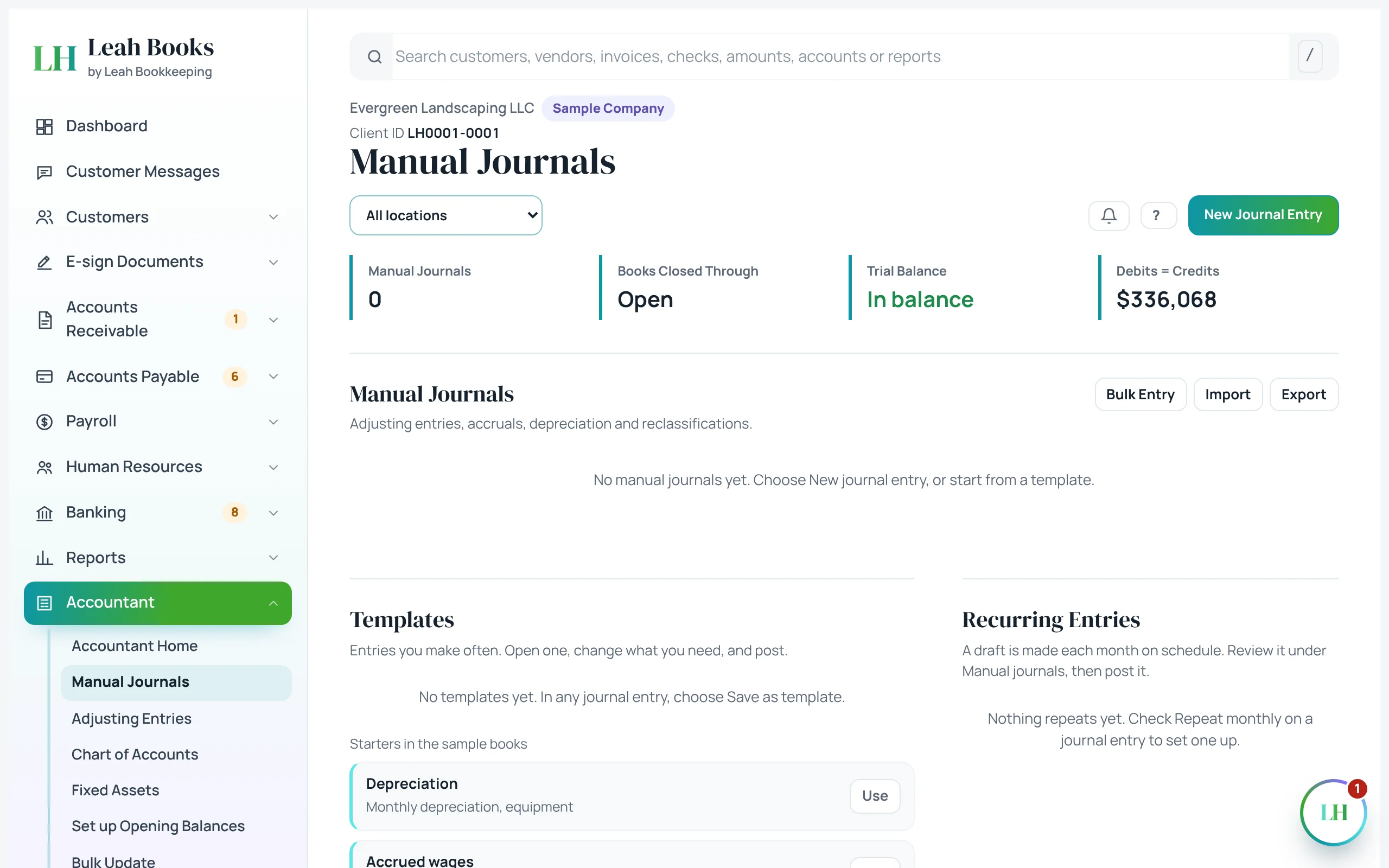 (opens the full-size screenshot)
What it can't catch
A trial balance can balance and still be wrong. These errors keep debits equal to credits, so it won't flag them:
- Wrong account: an $86.42 fuel purchase posted to Meals instead of Fuel. Both are expenses, totals still match.
- Omitted entry: a bill from Westside Equipment Rental that was never entered. No debit, no credit, nothing out of balance.
- Wrong amount on both sides: a $480 insurance bill entered as $840 as both the debit and the credit.
- Offsetting errors: one account overstated by $200 and another understated by $200 on the same side.
- Duplicate entry: the same bill entered twice.
Fixing a wrong-account error
Errors like these are found by reviewing accounts, reconciling the bank and reading reports, not by the trial balance. Once found, a wrong-account error is fixed with a reclassifying entry that moves the amount to the right place.
| Account | Debit (Dr) | Credit (Cr) |
|---|---|---|
| Fuel | $86.42 | |
| Meals | $86.42 | |
| Total Balanced | $86.42 | $86.42 |
Memo: Leah Books has this as the Reclassify a transaction template.
Are you Increasing or Decreasing?
| Debit | Credit |
|---|---|
| Liability | Asset |
| Equity | Draw |
| Revenue | Expense |
− To decrease an account, put it on the opposite side.
Meals goes down: press − and find Expense on the credit side.
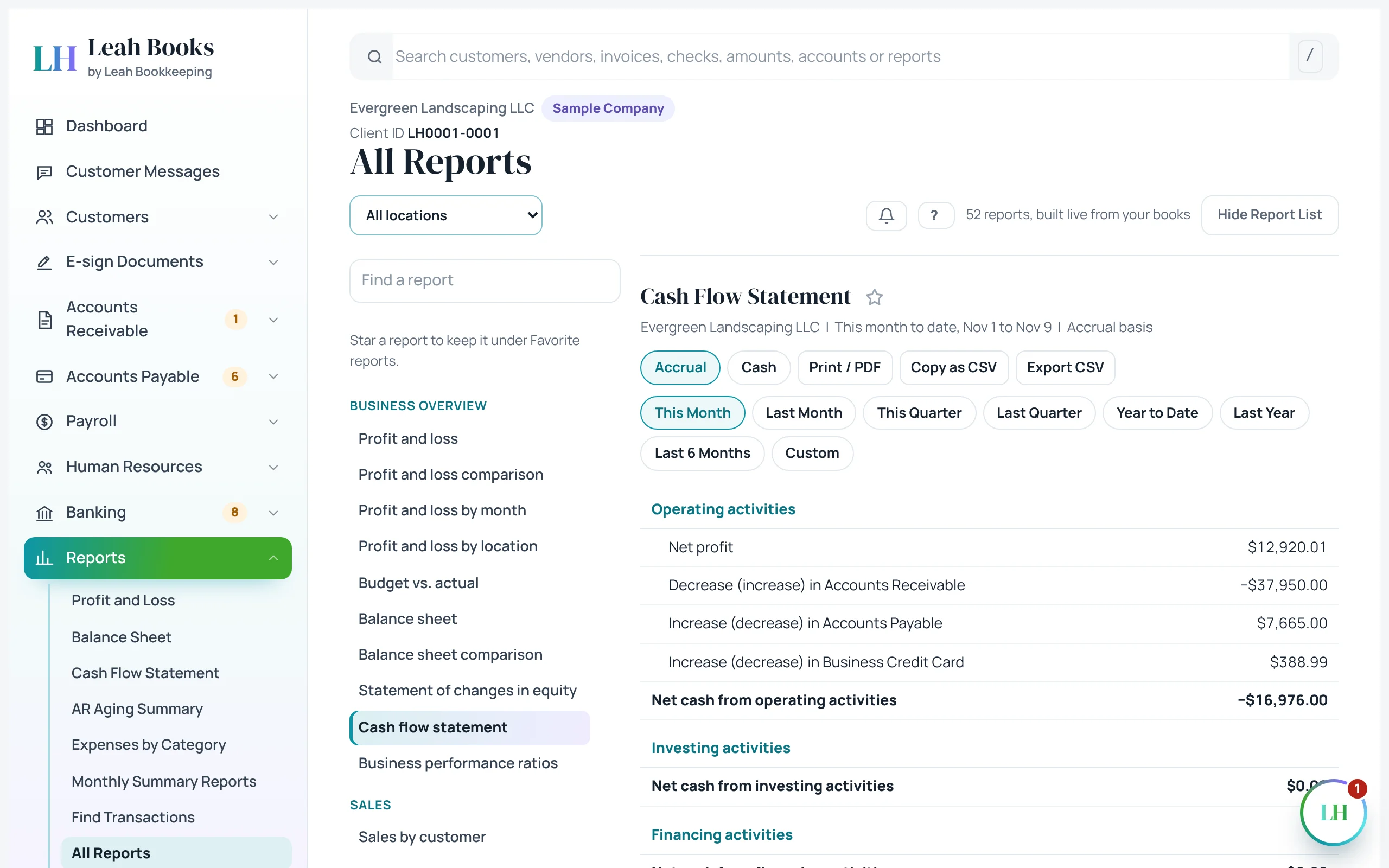 (opens the full-size screenshot)
Try it in Leah Books
- Go to Reports > All reports and open Trial balance. Check that total debits equal total credits.
- Go to Accountant > Manual journals. Under Start from a template, click Use next to Reclassify a transaction, look at the debit and credit lines, then post it.
- Open Trial balance again. It is still in balance, even though Fuel and Meals both changed. That is why a balanced trial balance can't prove the right accounts were used.
- Open Reports > Expenses by category to see where the amount moved.
Key terms
- Trial balance
- A list of every account's balance on a date, with debits and credits in separate columns that must total the same.
- Normal balance
- The side, debit or credit, that increases an account and where its balance usually sits.
- Transposition error
- Two digits swapped, like 640 entered as 460; the difference always divides evenly by 9.
- Offsetting error
- Two mistakes that cancel each other out, so the totals still match.
- Reclassifying entry
- A journal entry that moves an amount from the wrong account to the right one.
- Contra-asset
- An account that reduces an asset and carries a credit balance, like Accumulated Depreciation.
Check what you learned
Pick an answer to see if it's right and why. Nothing is saved or sent.