Fixed assets and depreciation
Decide when to capitalize a purchase, calculate straight-line depreciation, and read book value on the balance sheet.
- Principles:
- Historical cost
- Matching
- Materiality
Capitalize or expense?
A fixed asset is something the business buys to use for more than a year, like a truck, a commercial mower or a trailer. Instead of expensing the full cost when it's bought, you capitalize it: record it as an asset at its cost, then spread that cost over the years it helps earn revenue. That spreading is depreciation, and it follows the matching idea.
Small, short-lived purchases, like hand tools or a $40 hose, are simply expensed. Most businesses set a capitalization threshold, a dollar amount below which items are expensed. For taxes, the IRS has a de minimis safe harbor election with its own limits; check the current rules with a tax professional.
| Account | Debit (Dr) | Credit (Cr) |
|---|---|---|
| Equipment | $12,600.00 | |
| Business Checking | $12,600.00 | |
| Total Balanced | $12,600.00 | $12,600.00 |
Are you Increasing or Decreasing?
| Debit | Credit |
|---|---|
| Liability | Asset |
| Equity | Draw |
| Revenue | Expense |
− To decrease an account, put it on the opposite side.
Business Checking goes down: press − and find Asset on the credit side.
Straight-line depreciation
Straight-line depreciation expenses the same amount every year. You need three things: the cost, the salvage value (what you expect to get for it at the end), and the useful life.
Evergreen's mower cost $12,600, should sell for about $600 at the end, and should last 5 years.
Annual depreciation = (Cost − Salvage value) ÷ Useful life = ($12,600 − $600) ÷ 5 = $2,400 a year, or $200 a month
| Account | Debit (Dr) | Credit (Cr) |
|---|---|---|
| Depreciation | $200.00 | |
| Accumulated Depreciation | $200.00 | |
| Total Balanced | $200.00 | $200.00 |
Are you Increasing or Decreasing?
| Debit | Credit |
|---|---|
| Asset | Liability |
| Draw | Equity |
| Expense | Revenue |
+ To increase an account, put it on its normal side.
Depreciation goes up: press + and find Expense on the debit side.
Accumulated depreciation and book value
Depreciation never credits the Equipment account directly. It credits Accumulated Depreciation, a contra-asset with a normal credit balance. That way the balance sheet keeps showing the original cost and, beside it, how much has been used up.
Book value is cost minus accumulated depreciation. It is not what the asset would sell for today.
Book value = Cost − Accumulated depreciation
| End of year | Depreciation | Accumulated depreciation | Book value |
|---|---|---|---|
| 1 | 2,400 | 2,400 | 10,200 |
| 2 | 2,400 | 4,800 | 7,800 |
| 3 | 2,400 | 7,200 | 5,400 |
| 4 | 2,400 | 9,600 | 3,000 |
| 5 | 2,400 | 12,000 | 600 |
 (opens the full-size screenshot)
Other methods, and tax depreciation
Double-declining balance front-loads depreciation. Take twice the straight-line rate (2 ÷ 5 years = 40%) and apply it to the book value at the start of each year, ignoring salvage in the rate but never depreciating below salvage. Year 1 for the mower would be $12,600 × 40% = $5,040.
Tax depreciation follows its own rules, such as MACRS, Section 179 and bonus depreciation, and often gives different numbers than book depreciation. Those rules change, so check with a tax professional. Leah Books keeps book and tax depreciation side by side for each asset in its fixed asset register.
 (opens the full-size screenshot)
Try it in Leah Books
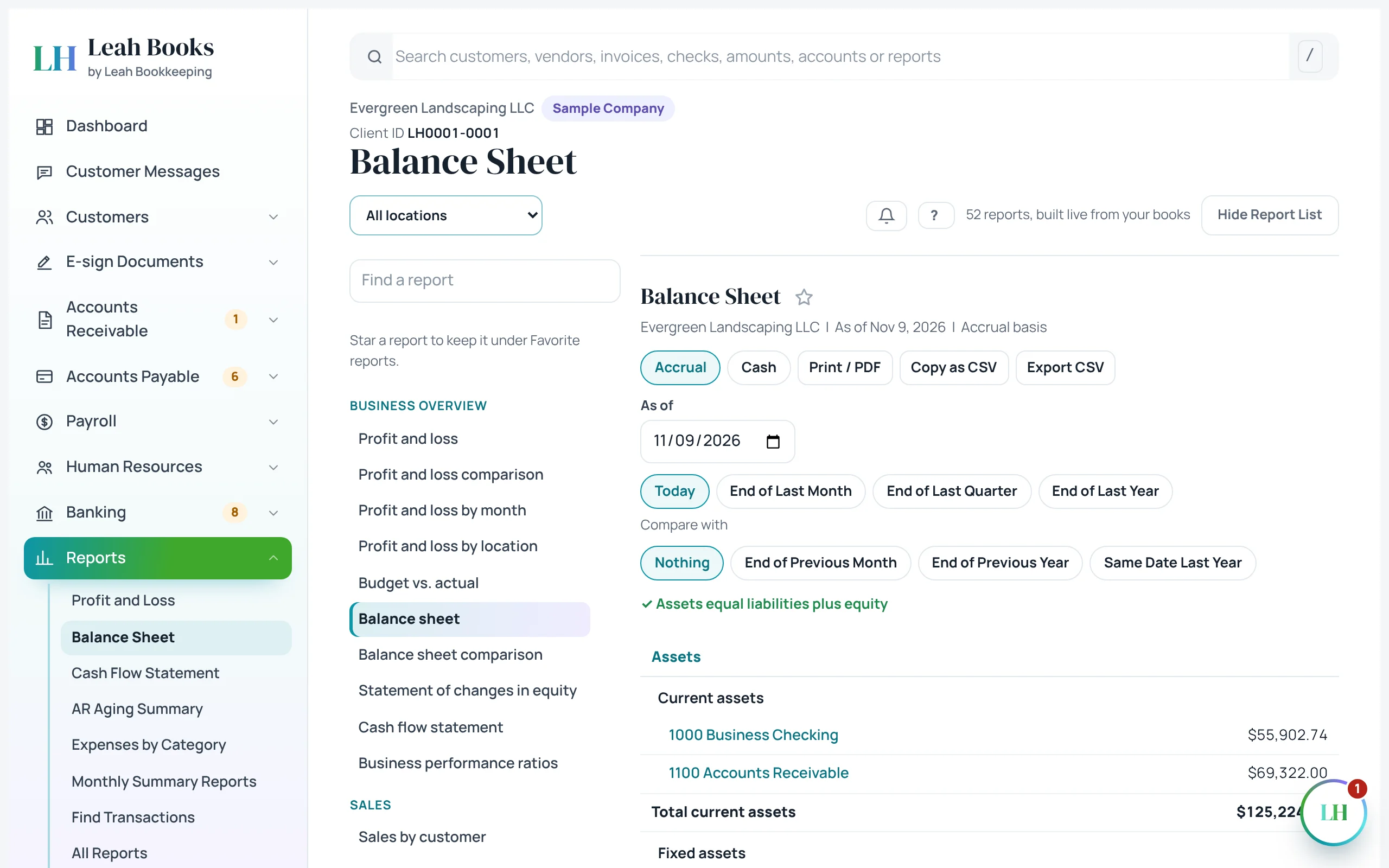
- Open Reports > Balance sheet and find your fixed assets and Accumulated Depreciation, if you have any.
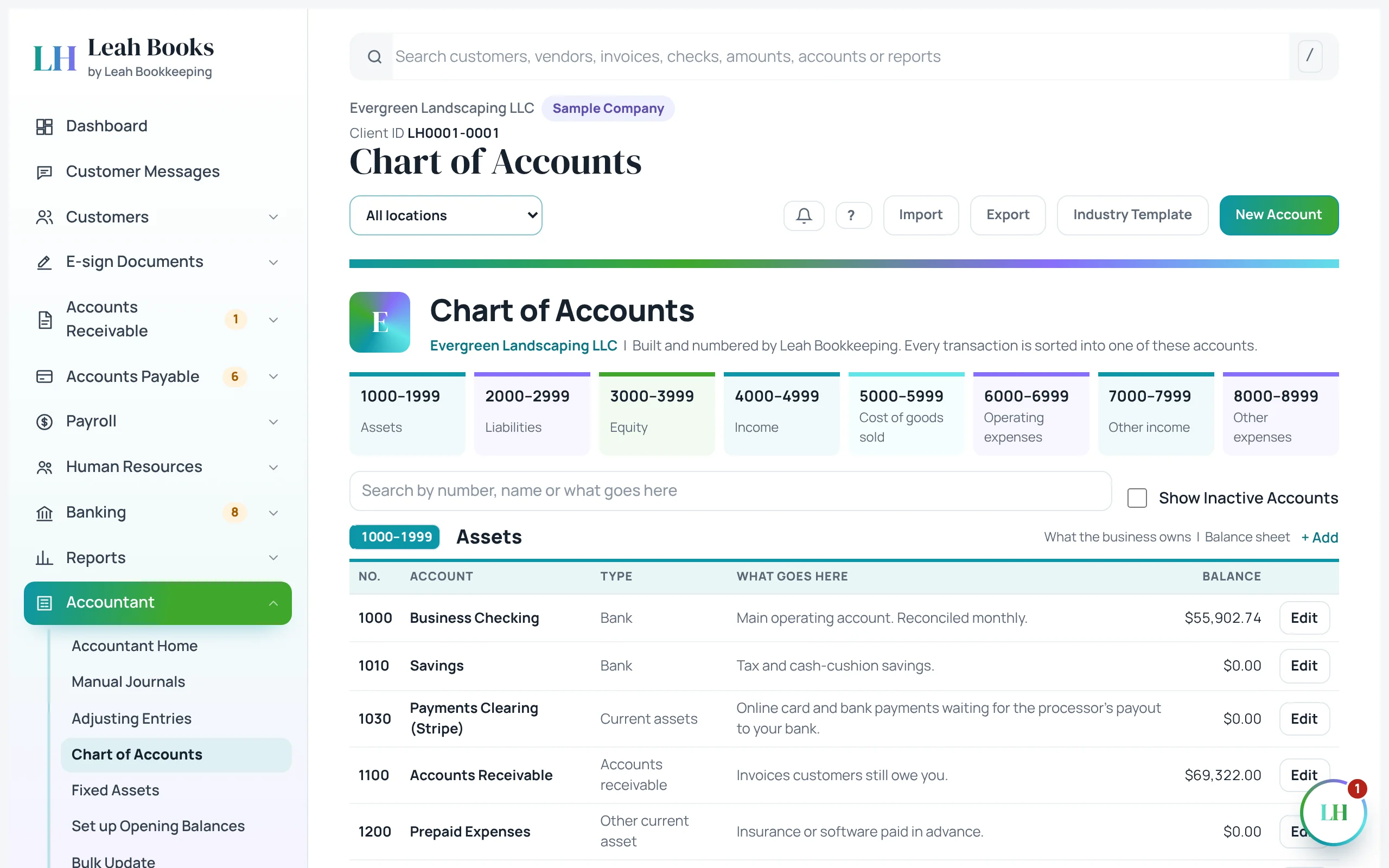
- Go to Accountant > Fixed assets and click Add asset. Enter a mower costing $12,600 with a $600 salvage value, straight-line method and a useful life of 5 years. Notice the tax fields are separate from the book fields.
- Go to Accountant > Manual journals and click Use next to the Depreciation template. Look at the debit to Depreciation and the credit to Accumulated Depreciation, then post it.
- Open Reports > Balance sheet again. Your equipment hasn't changed, but Accumulated Depreciation grew, so book value fell by the same amount.
Key terms
- Fixed asset
- Property or equipment bought to use in the business for more than a year.
- Capitalize
- Record a purchase as an asset instead of an expense, then depreciate it over its useful life.
- Depreciation
- Spreading the cost of a fixed asset over the years it is used.
- Salvage value
- What you expect an asset to be worth at the end of its useful life.
- Useful life
- How long the business expects to use an asset.
- Accumulated depreciation
- The total depreciation recorded on an asset so far; a contra-asset with a credit balance.
- Book value
- An asset's cost minus its accumulated depreciation.
Check what you learned
Pick an answer to see if it's right and why. Nothing is saved or sent.