Payroll in depth: liabilities, deposits and tax forms
You'll follow payroll from the paycheck to the tax deposit and the quarterly and year-end forms, and track PTO and other payroll liabilities.
- Principles:
- Matching
- Full disclosure
What a payroll creates
Every payroll does three things in the books: wage expense for gross pay, employer tax expense on top, and liabilities for everything withheld or owed until it's paid: federal withholding, Social Security and Medicare, state taxes, unemployment and deductions.
| Account | Debit (Dr) | Credit (Cr) |
|---|---|---|
| Payroll Taxes | $820.00 | |
| Federal Payroll Taxes Payable | $640.00 | |
| State Payroll Taxes Payable | $180.00 | |
| Total Balanced | $820.00 | $820.00 |
Are you Increasing or Decreasing?
| Debit | Credit |
|---|---|
| Asset | Liability |
| Draw | Equity |
| Expense | Revenue |
+ To increase an account, put it on its normal side.
Payroll Taxes goes up: press + and find Expense on the debit side.
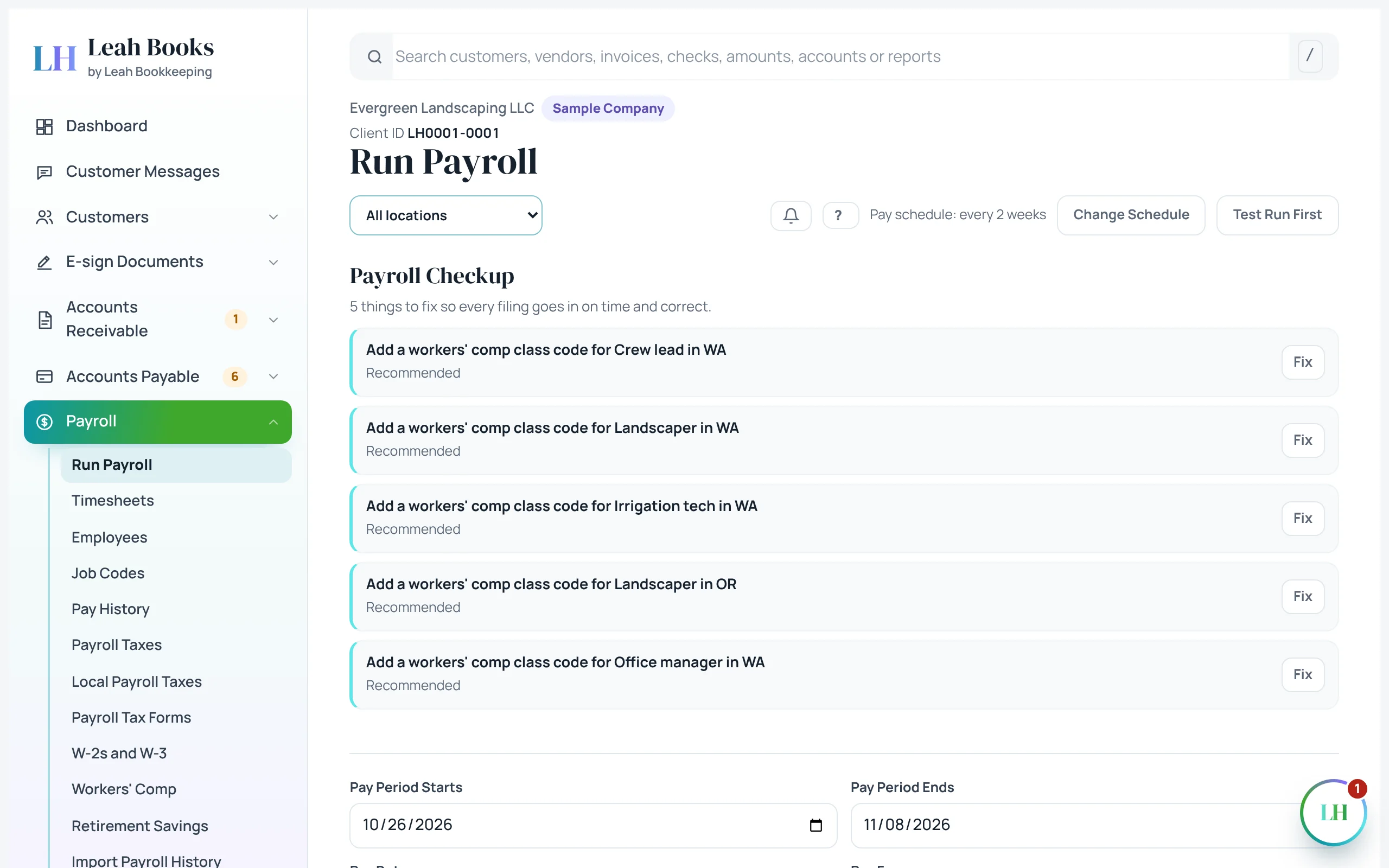 (opens the full-size screenshot)
Paying the liabilities
Withheld taxes are the employees' money held in trust, so deposit them on time. Federal deposits go through EFTPS on a monthly or semiweekly schedule. Paying the deposit clears the liability; it isn't a new expense.
Leah Books works out what's owed and when it's due. You pay on the agency's site and mark it paid.
| Account | Debit (Dr) | Credit (Cr) |
|---|---|---|
| Federal Payroll Taxes Payable | $2,475.00 | |
| Business Checking | $2,475.00 | |
| Total Balanced | $2,475.00 | $2,475.00 |
Are you Increasing or Decreasing?
| Debit | Credit |
|---|---|
| Liability | Asset |
| Equity | Draw |
| Revenue | Expense |
− To decrease an account, put it on the opposite side.
Federal Payroll Taxes Payable goes down: press − and find Liability on the debit side.
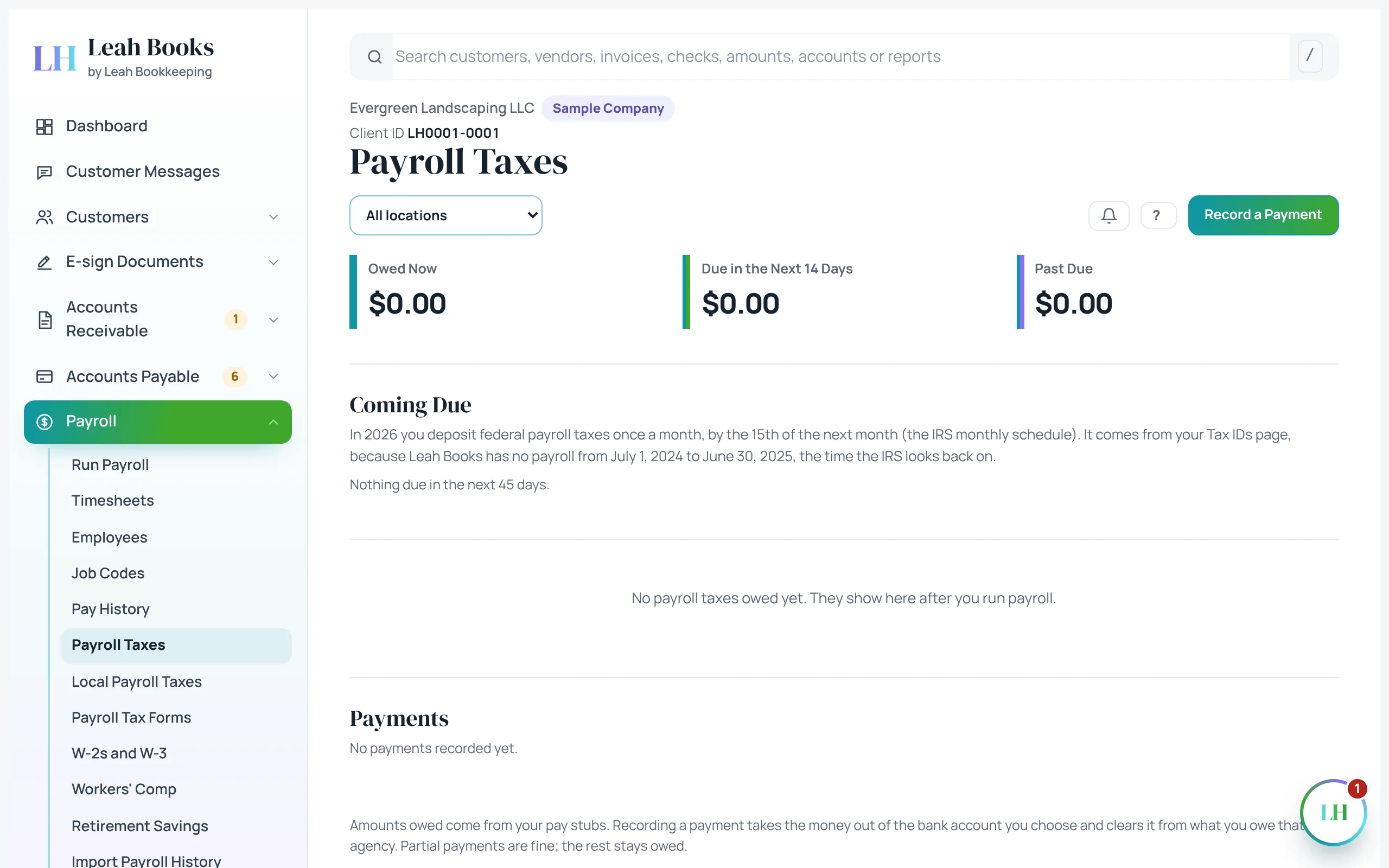 (opens the full-size screenshot)
Quarterly and annual forms
Each quarter, Form 941 reports federal withholding and Social Security and Medicare. Once a year, Form 940 reports federal unemployment, and W-2s and the W-3 report each employee's pay. States have their own returns.
Leah Books prepares these from your payrolls. You review them, then pay and file them with the agencies yourself.
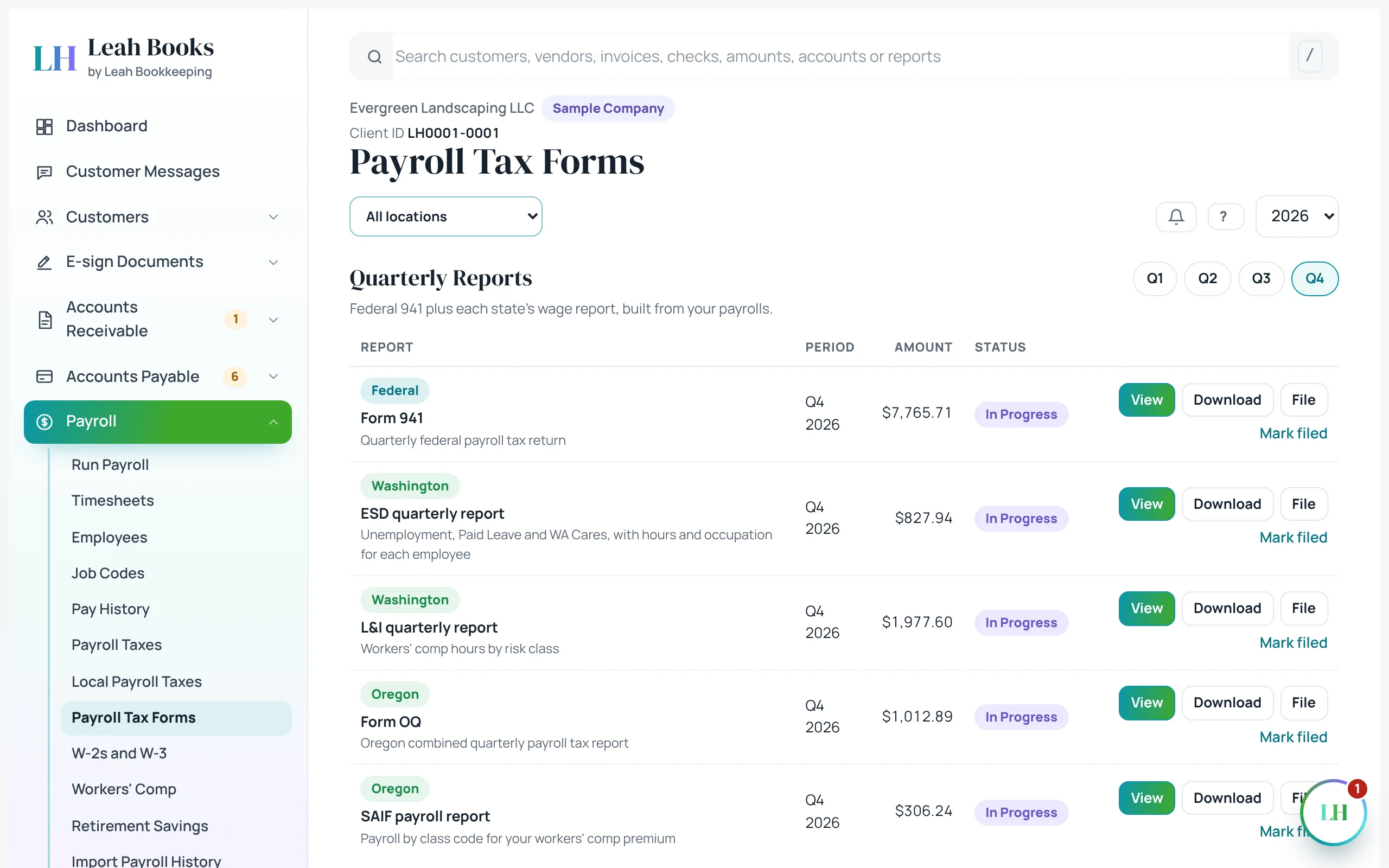 (opens the full-size screenshot)
Paid time off
Earned but unused vacation is a cost of the period it was earned. Many businesses accrue it as a liability: unused hours times each person's pay rate.
PTO liability = Unused PTO hours × Pay rate
| Account | Debit (Dr) | Credit (Cr) |
|---|---|---|
| Wages | $912.00 | |
| Accrued Liabilities | $912.00 | |
| Total Balanced | $912.00 | $912.00 |
Are you Increasing or Decreasing?
| Debit | Credit |
|---|---|
| Asset | Liability |
| Draw | Equity |
| Expense | Revenue |
+ To increase an account, put it on its normal side.
Wages goes up: press + and find Expense on the debit side.
Tie payroll to the books
Every month, check that the payroll reports and the books agree: wages and taxes on the profit and loss, and each liability on the balance sheet equal to what's still owed. Rates and rules change every year, so check yours with a tax professional.
Try it in Leah Books
- Go to Payroll > Run payroll, look at What this payroll costs, then click Submit payroll.
- Go to Payroll > Payroll taxes and find the deposit that payroll created. Look at Pay on EFTPS and Mark paid.
- Go to Payroll > Payroll tax forms and open a Form 941.
- Go to Payroll > W-2s and W-3 and look at the year-end forms.
- Go to Payroll > Check payroll against books.
Key terms
- Payroll liabilities
- Taxes and deductions withheld or owed, until they're paid.
- Tax deposit
- Paying withheld and employer taxes to the agency on schedule.
- Form 941
- The quarterly federal payroll tax return.
- Form 940
- The yearly federal unemployment tax return.
- W-2 and W-3
- Each employee's yearly pay and tax form, and the summary sent with them.
- PTO liability
- The value of earned, unused paid time off.
Check what you learned
Pick an answer to see if it's right and why. Nothing is saved or sent.