Overhead, cost pools and activity-based costing
You'll tell direct costs from overhead, group shared costs in a cost pool, pick a cost driver, allocate overhead to jobs or locations, and see how activity-based costing refines it.
- Principles:
- Matching
- Consistency
Direct and indirect costs
A direct cost can be traced to one job: the plants, the subcontractor, the crew's hours on that job. An indirect cost, or overhead, is shared: yard rent, the office manager, the shop's power. To know what a job or a location really costs, overhead has to be spread over the work that uses it.
Cost pools and cost drivers
A cost pool groups shared costs that behave alike, like all the yard costs. A cost driver is what makes those costs happen, or a fair measure of who uses them: square feet, crew hours, truck miles, number of jobs.
Overhead rate = Cost pool total ÷ Total driver units
A worked example
Evergreen's yard costs $6,000 a month: rent, power and security. Two crews share it. Vancouver uses 4,000 square feet and Portland 2,000.
| Location | Square feet | Share | Overhead |
|---|---|---|---|
| Vancouver | 4,000 | 2/3 | $4,000 |
| Portland | 2,000 | 1/3 | $2,000 |
| Total | 6,000 | $6,000 |
| Account | Debit (Dr) | Credit (Cr) |
|---|---|---|
| Rent (Portland) | $2,000.00 | |
| Rent (Vancouver) | $2,000.00 | |
| Total Balanced | $2,000.00 | $2,000.00 |
Memo: Total expense doesn't change; only where it shows.
Are you Increasing or Decreasing?
| Debit | Credit |
|---|---|
| Liability | Asset |
| Equity | Draw |
| Revenue | Expense |
− To decrease an account, put it on the opposite side.
Rent (Vancouver) goes down: press − and find Expense on the credit side.
Overhead to jobs
To price jobs, use a rate per driver unit. If yard and equipment overhead is $9,000 a month and crews work 1,200 hours, overhead is $7.50 an hour. A 40-hour job carries $300 of overhead on top of its direct costs.
$9,000 ÷ 1,200 crew hours = $7.50 an hour; 40 hours × $7.50 = $300
Activity-based costing
One rate for everything can mislead. Activity-based costing (ABC) uses several pools, each with its own driver: equipment cost by machine hours, scheduling by number of jobs, travel by miles. Jobs that use more of an activity carry more of its cost, so prices and profit by job or customer are closer to the truth.
In Leah Books
Track each crew or site as a location, tag invoices, bills and journal lines with it, and read Profit and loss by location. Under Accountant, Allocations keeps cost pools: pick the costs, how to split them (fixed percentages, a driver you enter, evenly or by share of revenue) and run the pool each month. Moves post through an allocation clearing account that nets to zero.
For a rate per job, work it out from the reports with the driver counts you keep, and add it to your pricing.
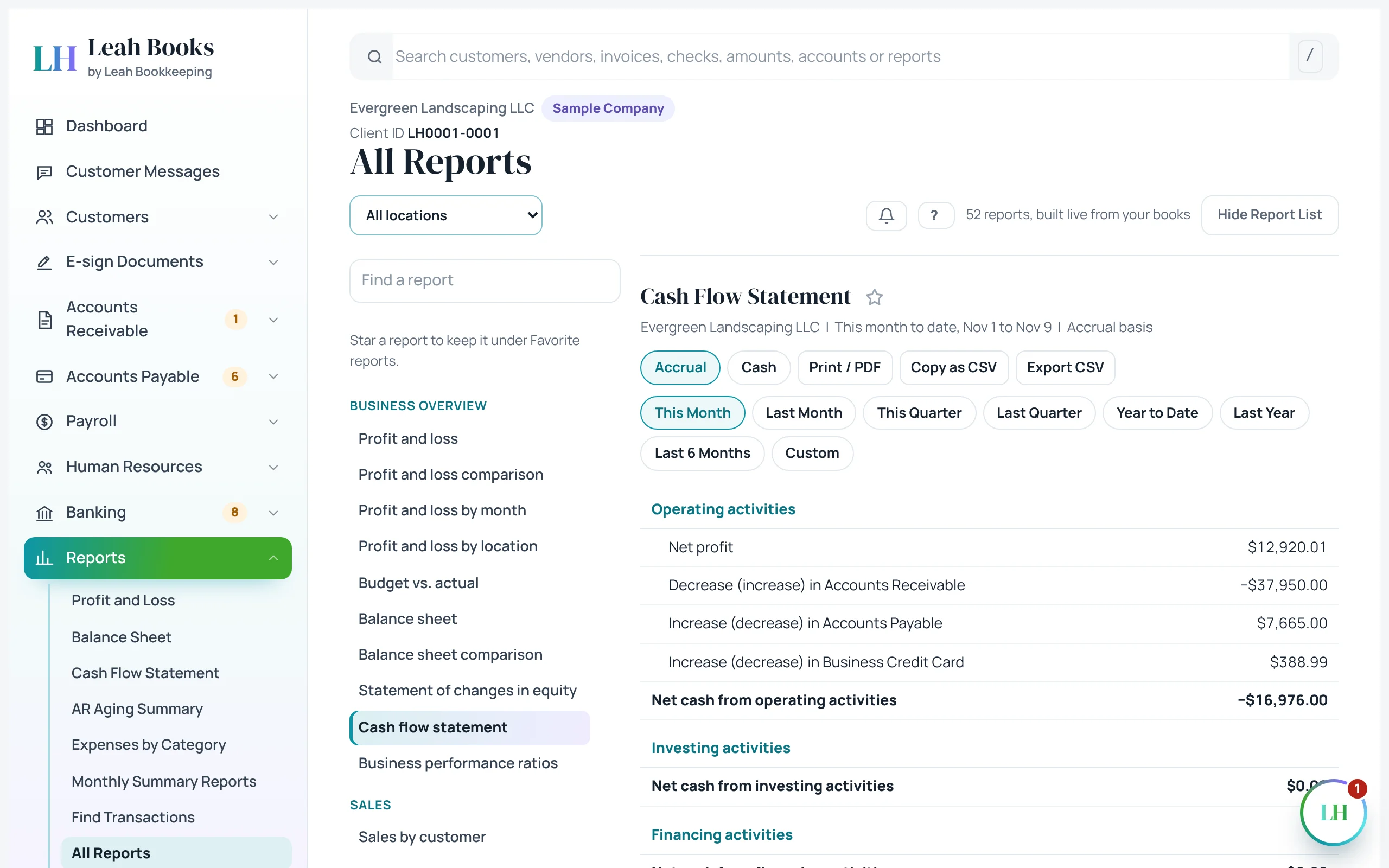 (opens the full-size screenshot)
Try it in Leah Books
- Go to Settings > Locations and look at the locations you track, or add a second one.
- Go to Accountant > Allocations and click New cost pool. Pick 6300 Rent, split it by a driver you enter (square feet), and look at the preview.
- Open Reports > All reports > Profit and loss by location.
- Work out an overhead rate: a month's shared costs divided by crew hours.
Key terms
- Direct cost
- A cost traced to one job, product or location.
- Overhead
- Shared indirect costs that can't be traced to one job.
- Cost pool
- A group of shared costs allocated together.
- Cost driver
- The activity or measure used to split a cost pool.
- Overhead rate
- A cost pool divided by its total driver units.
- Activity-based costing
- Allocating overhead with several pools, each with its own driver.
Check what you learned
Pick an answer to see if it's right and why. Nothing is saved or sent.